

How to Appendix Carry: Set Up Your Holster So It Actually Works
Appendix carry means wearing your pistol inside the waistband, in front of your hip, roughly between 12 and 2 o’clock for a right-handed shooter. You’ll see it written as AIWB: appendix inside the waistband.
It’s popular for good reasons. Your hand is already near the gun most of the day. The draw is short and in front of you, where you can see it. Your arms and body help shield the gun from a grab. And it works seated, in a car, or on your back.
It also has a reputation for being uncomfortable. Most of that reputation comes from people wearing the wrong holster, set up the wrong way. Appendix carry is less about the gun and more about the system around it: holster, belt, and a few small adjustments.
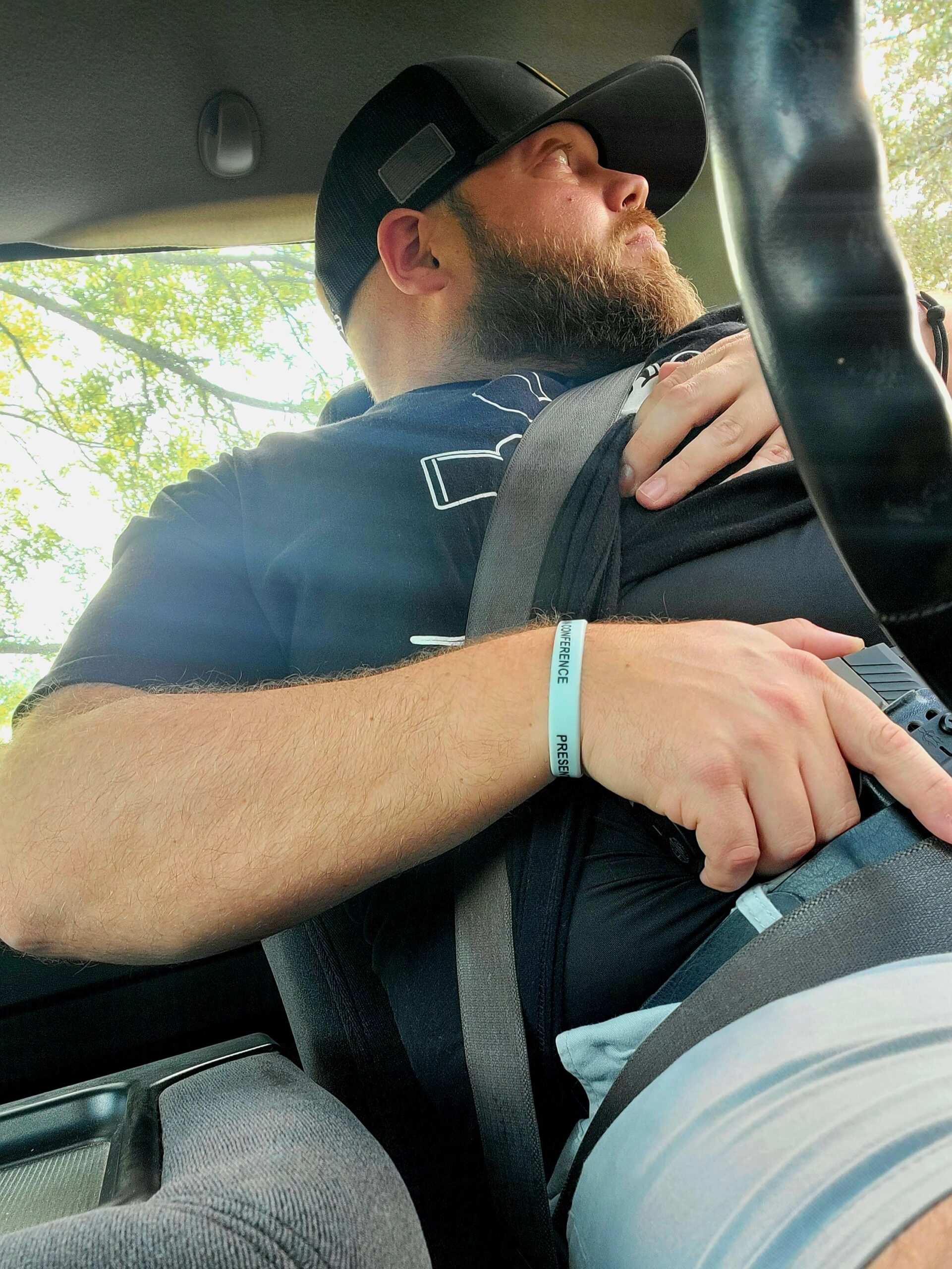
This guide walks through that setup in order. If you follow the steps and test as you go, you’ll know within a week whether appendix carry works for you.
Setting up your appendix carry holster, step by step
Do these in order. Each step builds on the one before it, and skipping the early ones is why most people quit.
Step 1: Start with a holster built for appendix
A holster that rides well at 4 o’clock is usually miserable at 1 o’clock. Strong-side holsters aren’t shaped to work against the front of your body, and most have nowhere to mount the parts that make appendix comfortable.
A good appendix carry holster has:
- Rigid Kydex that fully covers the trigger guard and holds its shape when the gun is out
- A wing (claw) that uses belt pressure to rotate the grip in toward your body
- Adjustable ride height, and ideally adjustable cant
- A wedge that cushions the bottom edge and tilts the holster so the grip tucks in
Every KSG holster in the Lexington, Revere and Declaration lines is built around these features.

Step 2: Go longer than the gun
This surprises people. A short holster on a short gun feels like the obvious match, but in appendix it works against you.

This holster expends more than an inch beyond the end of this HK CC9
Your belt acts as a pivot point. Everything above the belt (the grip) wants to tip out. Everything below it (the holster body) is your lever to push it back in. A short holster gives you a short lever, concentrates pressure into one spot, and lets the grip flop away from your body.
Extending the holster an inch or so past the muzzle spreads that pressure out and gives the wedge more to work with. Most people can comfortably wear a full-size-length holster even on a subcompact pistol. If you’re ordering from KSG, choose the AIWB length option. It matters most on guns with barrels under 4 inches.
Step 3: Add a wedge
A wedge is a foam pad that sits between the bottom of the holster and your body. It does two jobs. It cushions the hard holster edge so it doesn’t dig into your lower abdomen. And it tilts the bottom of the holster out, which pushes the grip in toward your body.

The KSG Universal Appendix Carry Wedge is closed-cell foam with hook-and-loop backing, in short (2.25 x 3 in) or long (2.25 x 4.25 in), angled or block cut. You can trim it with a sharp knife.
Start with the short angled wedge. Only go bigger if the grip still prints after you’ve worked through the steps below. Too much wedge pushes the whole gun out and makes things worse.
Step 4: Use a wing (claw)
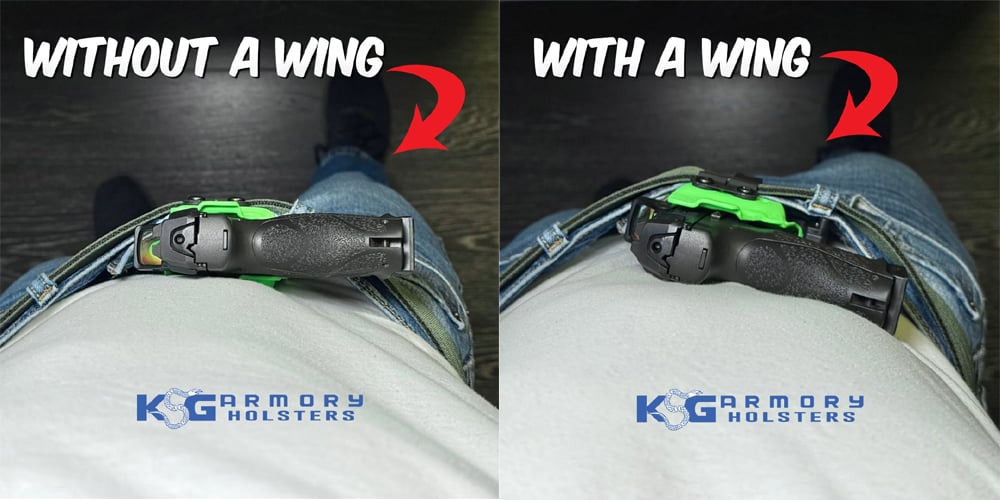
The wing is a small piece mounted near the top of the holster that presses against the inside of your belt. Belt tension pushes on it, and it rotates the grip in toward your body. The wedge handles the bottom of the holster; the wing handles the top. You need both.
KSG holsters ship with a ModWing, which has two claw heights so you can choose how much rotation you get. The DarkWing and RCS claw also fit if you prefer them.
Step 5: Wear a real gun belt
The wing only works if it has something firm to push against. A thin dress belt or a stretchy one lets the whole holster tip and sag no matter how well it’s set up.
Wear a stiff belt made for carrying, tightened snug but not cinched. If you tuck your shirt in, or wear clothes without belt loops, look at the PHLster Enigma. It’s a chassis that bolts to the holster and holds it in place without a belt.
Step 6: Find your position
Right-handed shooters usually start around 1 o’clock: just right of your belt buckle, with the gun close to vertical. Left-handed shooters mirror that at 11.
From there, move the holster in half-inch steps. A half inch either direction can be the difference between a holster you forget about and one you can’t wait to take off. Slimmer builds often end up closer to the centerline. People carrying more weight up front often do better a little farther toward the hip.

Step 7: Set ride height and cant
Ride height is how high the gun sits relative to your belt. Higher gives you a fuller grip on the draw but prints more. Lower hides better but makes the grip harder to get to. Start in the middle and adjust one notch at a time.
Cant is the angle of the gun. Most people run appendix close to straight up and down, with a few degrees either way for comfort. The Lexington and Revere both let you adjust ride height and cant, so you can tune the holster to you instead of adapting to it.
Test it before you trust it
Standing in front of a mirror tells you very little. Appendix carry usually feels fine standing up. The problems show up when you bend at the waist. Unload the gun, holster it, and run through this:
- Sit in a regular chair for five minutes, then a low couch. The muzzle end should rest in the crease of your hip, not jab into your thigh.
- Squat down like you’re picking something up off the floor. Then bend over like you’re tying a shoe.
- Get in your car and buckle the seatbelt.
- Check the mirror from the front and side in a fitted T-shirt. Then raise your arms overhead.
- Walk around the house for an hour doing normal things.
If something hurts or prints, note when it happens and adjust one thing at a time. Change two things at once and you won’t know which one helped.
Give it a week. Most people find the first few days feel strange and the second half of the week feels normal. Real pain on day seven means something in the setup still needs to change.
Draw and reholster safely
The draw from appendix is short and straightforward. Clear your cover garment with your support hand, establish a firm grip, and drive the gun up and out toward the target. Keep your finger off the trigger until the gun is pointed where you intend to shoot.
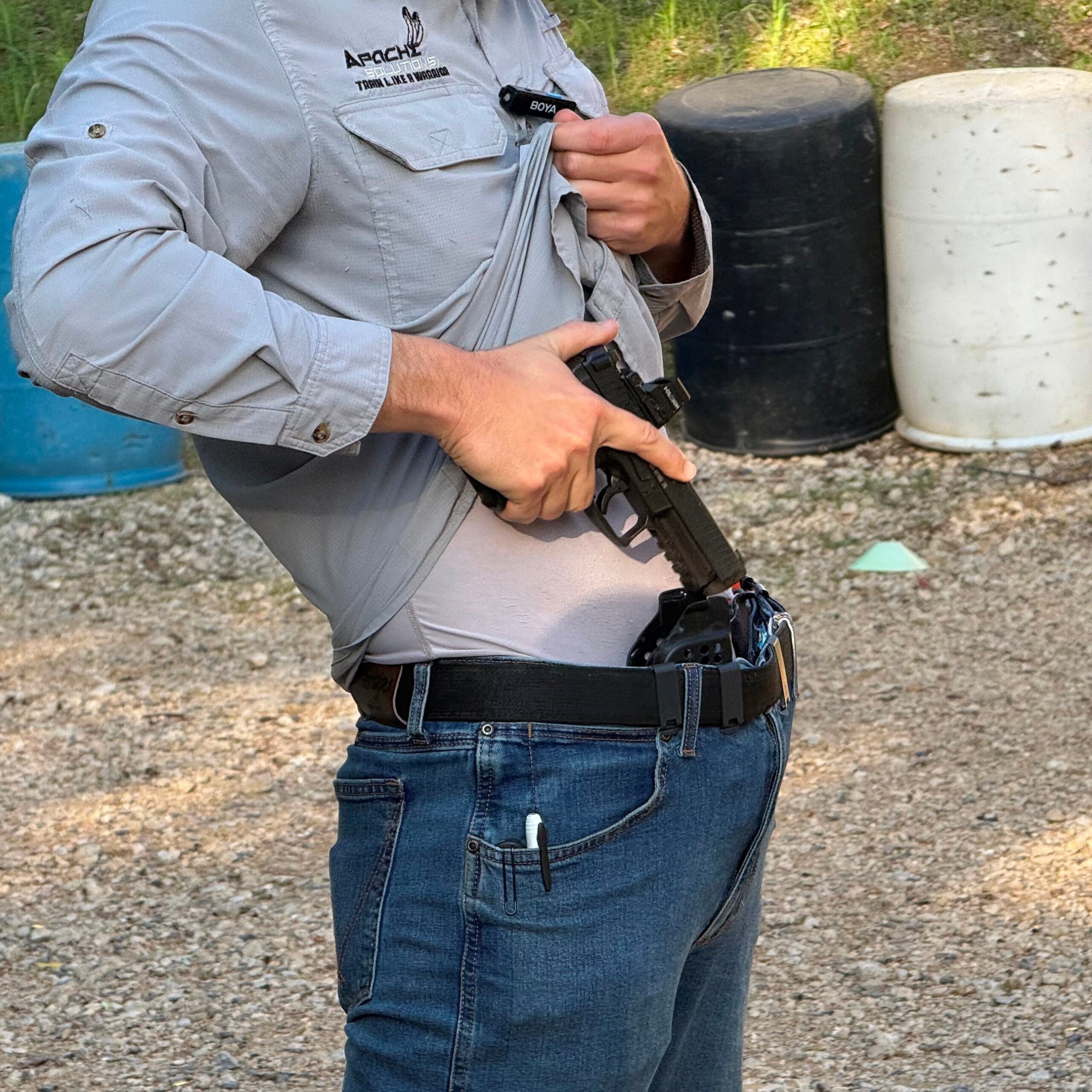
Reholstering is where concealed carriers carriers need the most discipline. Slow down. In appendix carry, push your hips forward and shoulders back so the muzzle angles away from your body. Look the gun into the holster and make sure your shirt, jacket drawstring or anything else is clear of the trigger guard. If you’re not sure, take the holster out, holster the gun, and put it back on.
Practice both with an unloaded gun or a training pistol before you carry. Dry fire is the cheapest way to make a new carry position automatic.
Troubleshooting common appendix carry problems
Most complaints trace back to one of a handful of causes. Find your symptom and try the fix in the right-hand column first.
| Problem | Likely cause | What to try |
|---|---|---|
| Grip prints through your shirt | Not enough rotation at the top, or a flimsy belt | Use the taller ModWing claw, tighten the belt a notch, then add more wedge |
| Muzzle digs in when you sit | Holster too far toward center, or too low | Move it a half inch toward your hip, raise the ride height one notch |
| Bottom edge of holster hurts | No wedge, or holster too short | Add a short angled wedge; order the AIWB length |
| Whole gun pushes away from your body | Too much wedge, or a soft belt | Trim the wedge down; switch to a stiffer belt |
| Holster shifts around during the day | Belt too loose, or single clip on a heavy gun | Snug the belt; use a DCC Monoblock or two clips |
| Hard to get a full grip on the draw | Ride height too low | Raise the ride height one notch at a time |
| Can’t tuck your shirt in | Belt clips show above the waistband | Run the holster on a PHLster Enigma, or use tuckable clips |
Still not working after a week of adjusting? Read Why Appendix Carry Didn’t Work For You on ConcealedCarry.com, or contact us with your gun, your build and what’s bothering you. We’ll tell you what we’d try next.
Which KSG appendix carry holster to choose
If you’re not sure, start with the Lexington. All four are made to order for your specific pistol, optic-ready, and built to take a wedge and wing.
| Holster | Best for | What sets it apart |
|---|---|---|
| Lexington | Most people, most guns | Our flagship. Ships with a ModWing, short angled wedge and slightly extended length. Adjustable ride height, cant and retention. Widest list of supported pistols. |
| Revere | Pistols with a weapon light | Light-bearing version of the same idea. ModWing and DCC Monoblock standard, wedge available. Built to pair with the PHLster Enigma. |
| Declaration | Enigma users and minimalists | Stripped down to the essentials and designed around the Enigma. Recommended setup includes a ModWing and short angled wedge. |
| Knox | Carrying a spare magazine up front | Sidecar design with a detachable mag carrier. The mag balances the gun and helps flatten the bulge. Appendix only. |
Compare every feature side by side on the Holster Comparison page.
Appendix carry FAQ
Is appendix carry safe?
Yes, with a quality holster that fully covers the trigger guard and a careful reholstering habit it is as safe as any other IWB position. Most negligent discharges in any carry position happen while holstering. Slow down, look the gun in, and keep clothing clear of the trigger.
Can you appendix carry with a belly?
Yes. Many larger carriers find appendix more comfortable than the hip once the holster is set up. If at first you don’t succeed add a wedge or a larger wedge and maybe move it a bit farther toward the hip, run a longer holster, and lean on the wedge more and more.
Is appendix carry comfortable when sitting or driving?
It should be. If the muzzle digs in when you sit, the holster is usually too far toward center, riding too low, or too short. Fix those before giving up on the position.
Do I need a wedge for appendix carry?
Most people benefit from one. A wedge adds comfort at the bottom of the holster and helps tuck the grip in. Start small and add more only if you still print.
What’s the best gun for appendix carry?
The same as every other carry position. The largest gun you can comfortably conceal well.
Can I appendix carry with a weapon light?
Yes. You need a light-bearing holster like the Revere. The extra length below the belt often makes a light-bearing setup more stable than the same gun without one.